How to Avoid Water Spots on Your Car (Before They Etch): A Guide for Beaverton and Portland Area Drivers
Understanding Local Hard Water Hazards and Protecting Your Vehicle in the Portland Metro Area
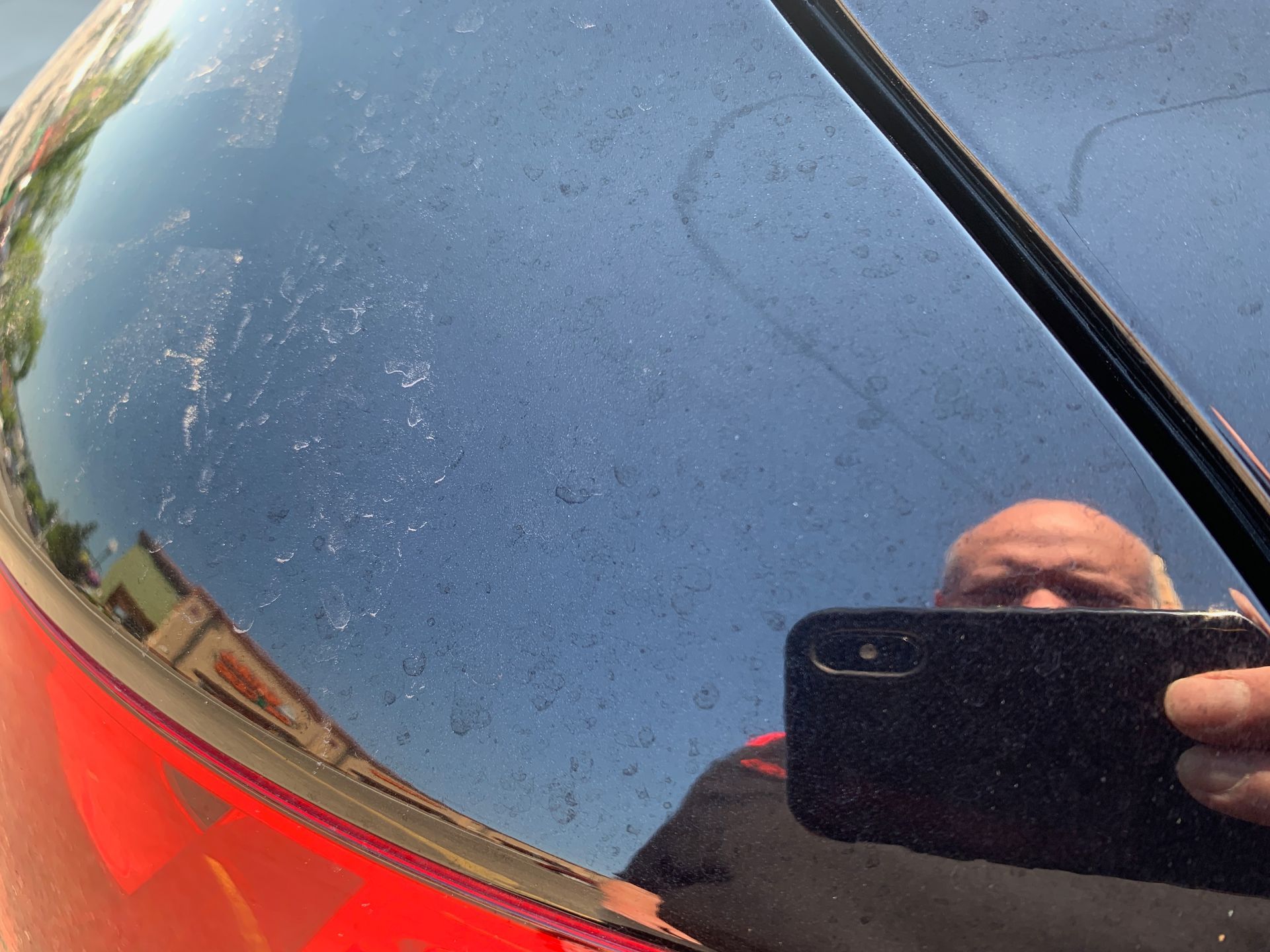
Every summer at Fresh Start Detail & Ceramic Coating Co. in Beaverton, our shop fills up with vehicle owners frustrated and confused by the sudden appearance of chalky-white rings and rough white spots across their hoods, roofs, and glass of their car. They often ask
"What causes these hard water spots?"
Most drivers assume that because the Beaverton-Portland area is famous for “soft” water, that a quick splash from a lawn sprinkler or office park irrigation system is harmless.
Unfortunately, that single misconception costs PNW car owners thousands of dollars in paint damage every year.
Since these damaging water spots are caused by certain dissolved solids in tap water (silica, calcium carbonate, magnesium, and oxidized iron to name the biggest offenders) it’s important to know which water source(s) you should be most concerned about.
Understanding that there are different sources of water that may get sprayed onto your car, it becomes important to know why
irrigation water behaves differently than standard drinking water from your tap
in the Tualatin Valley and NW Portland areas, and how our local climate turns minor water overspray into permanent clear coat etching damage is the key to keeping your vehicle's finish pristine and avoiding those dreaded and expensive-to-remove hard water spots on your car.
The Local Water Grid: Tualatin Valley vs. Willamette Valley Chemistry
To understand why your paint is at risk, you first need to understand where local ground water comes from and how its mineral profile shifts drastically depending on your neighborhood and the time of year.
The Portland Water Bureau (Bull Run)
If you live or work in central Portland or select eastside suburbs, the municipal tap water originates in the Bull Run Watershed. Bull Run water is exceptionally soft, registering between 6 to 11 parts per million (ppm) of dissolved minerals. Under normal winter conditions, this water contains minimal calcium and magnesium.
Washington County & Tualatin Valley Water District (TVWD)
If you drive through Beaverton, Bethany, Cedar Mill, Cooper Mountain, or Hillsboro, your local water supply relies on a more complex network.
TVWD and surrounding municipal systems draw heavily from the
Joint Water Commission (JWC), which sources water from the Tualatin River basin, Barney Reservoir, and Hagg Lake. JWC water carries a higher baseline mineral hardness, typically around 34 ppm, which is still relatively soft.
The Summer Groundwater Shift
During peak summer dry spells (July through September), local water utilities supplement their water supply to handle the massive surge in summer-season demand.
Portland engages the
Columbia South Shore Well Field, blending deep groundwater into the city grid.
TVWD & Washington County trigger
Aquifer Storage and Recovery (ASR) wells and deep groundwater pumping.
Groundwater is drawn directly from mineral-dense basalt aquifers. This seasonal shift drastically raises Total Dissolved Solids (TDS), calcium carbonate, and silica levels in municipal tap water right when property owners turn on their irrigation systems.
The Commercial Irrigation Nightmare: Untreated Wells and Retention Ponds
While your tap water hardness increases in summer, the single biggest threat to vehicle paint in Beaverton and NW Portland usually isn't your tap water, it is commercial irrigation water.
Intel Ronler and Aloha campuses, Tektronix, Amberglen Business Park, Progress Ridge Town Square in south Beaverton, Streets of Tanasbourne, Timberland Town Center in Cedar Mill, TriMet Operations Facility on Merlo Road in Beaverton all use on-site irrigation ponds that are filled with untreated water that is used in landscaping sprinkler systems.
There are also large office parks along Highway 217, retail centers in Bethany and Cedar Mill, other corporate campuses, master-planned HOAs, and local golf courses like RedTail Golf Course that use irrigation water instead of treated municipal drinking water to irrigate land. Many of these properties have private shallow irrigation wells or draw directly from untreated stormwater retention ponds.
This untreated irrigation water presents three major threats to automotive clear coat:
- High Silica Content: Deep groundwater wells in the Pacific Northwest cut through ancient volcanic rock, saturating the water with dissolved silicon dioxide (silica). Silica forms a glass-like bond on your paint and glass that standard acid-based “descaler” products (ie “ water spot removers”) usually fail to dissolve.
- Concentrated Runoff: Retention ponds gather surface runoff packed with lawn fertilizers, nitrates, and highly alkaline soil minerals. When sprayed onto hot vehicle panels, this high-pH mixture aggressively attacks your clear coat.
- Dissolved Iron: Shallow wells often contain high levels of oxidized iron. The same mineral runoff responsible for those orange stains on concrete walls we often see will deposit heavy metal films across your clear coat too.
The PNW Summer "Cooker": Morning Sprinklers to Hot Sun
Our local climate in the Tualatin and Willamette Valleys creates a destructive cycle for surface etching on your car’s paint.
Commercial property managers usually set automatic sprinkler timers to run between 3-6am to conserve water. If a vehicle is parked near a misaligned sprinkler head, water overspray coats your paint with the mineral-laden droplets we’ve mentioned.
As the sun rises, temperatures climb into the 80-90s. Darker painted cars easily reach surface temperatures between 140-160° in direct sunlight.
The thermal sequence is fascinating (but still annoyingly destructive!) on a microscopic level as it bakes minerals into your finish.
Here’s what’s going on…
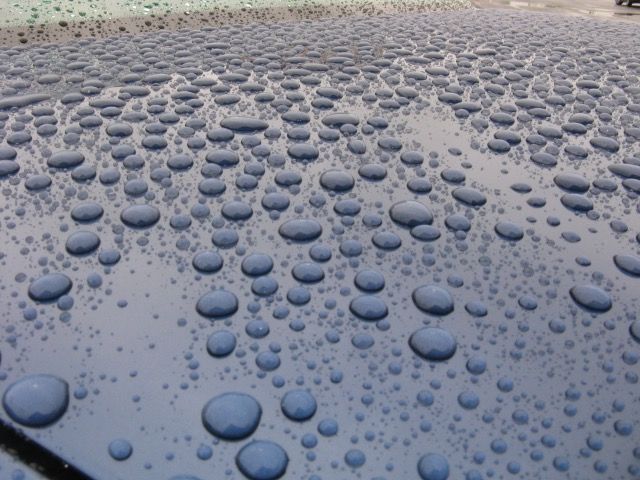
The first stage is when each water drop evaporates, starting from the outer edges of the droplet inward. As the liquid volume shrinks, mineral concentration inside the remaining drop skyrockets to become quite dense.
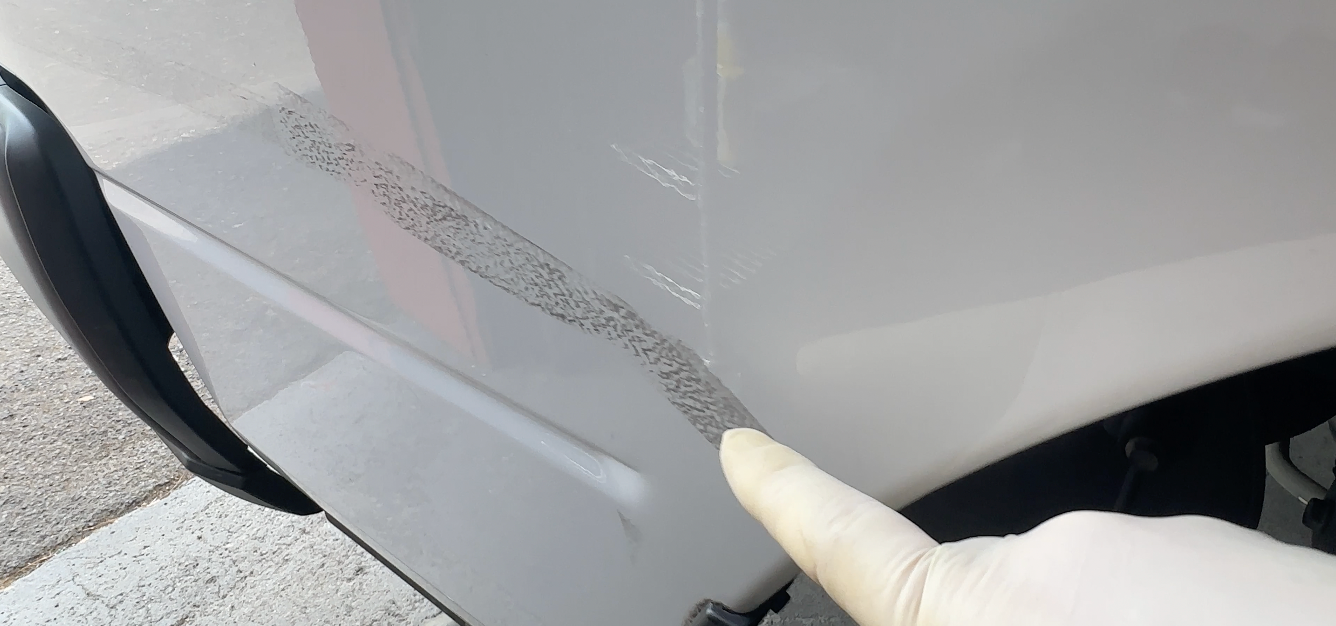
The second stage happens once the liquid has evaporated completely, then the calcium, magnesium, and silica that were previously dissolved into the droplets now crystallize into sharp mineral structures. Driven by intense surface heat, these expanding crystals bite into the softened clear coat, forming the small physical craters that we see as “hard water spots.”
The Rainwater Myth: Why Rain Doesn't Cause Water Spots
A frequent misunderstanding among drivers is that natural rainfall causes water spots. Customers often ask, "My car got soaked in a rainstorm yesterday, and now it has white rings everywhere."
Rainwater does NOT contain hard mineral salts.
Rain is created through atmospheric evaporation and condensation, which if you think about it, is a
natural distillation process.
And because rainwater lacks dissolved calcium, magnesium, or silica, it
evaporates cleanly without leaving behind minerals that etch your clear coat. (Though it usually contains some dust that it has picked up as it traveled down from the clouds through the atmosphere and onto your car. This dust is annoying, but is just harmlessly lying on the surface and is easily washed off.)
So when a vehicle appears spotted after a rainstorm, one of two things has actually occurred:
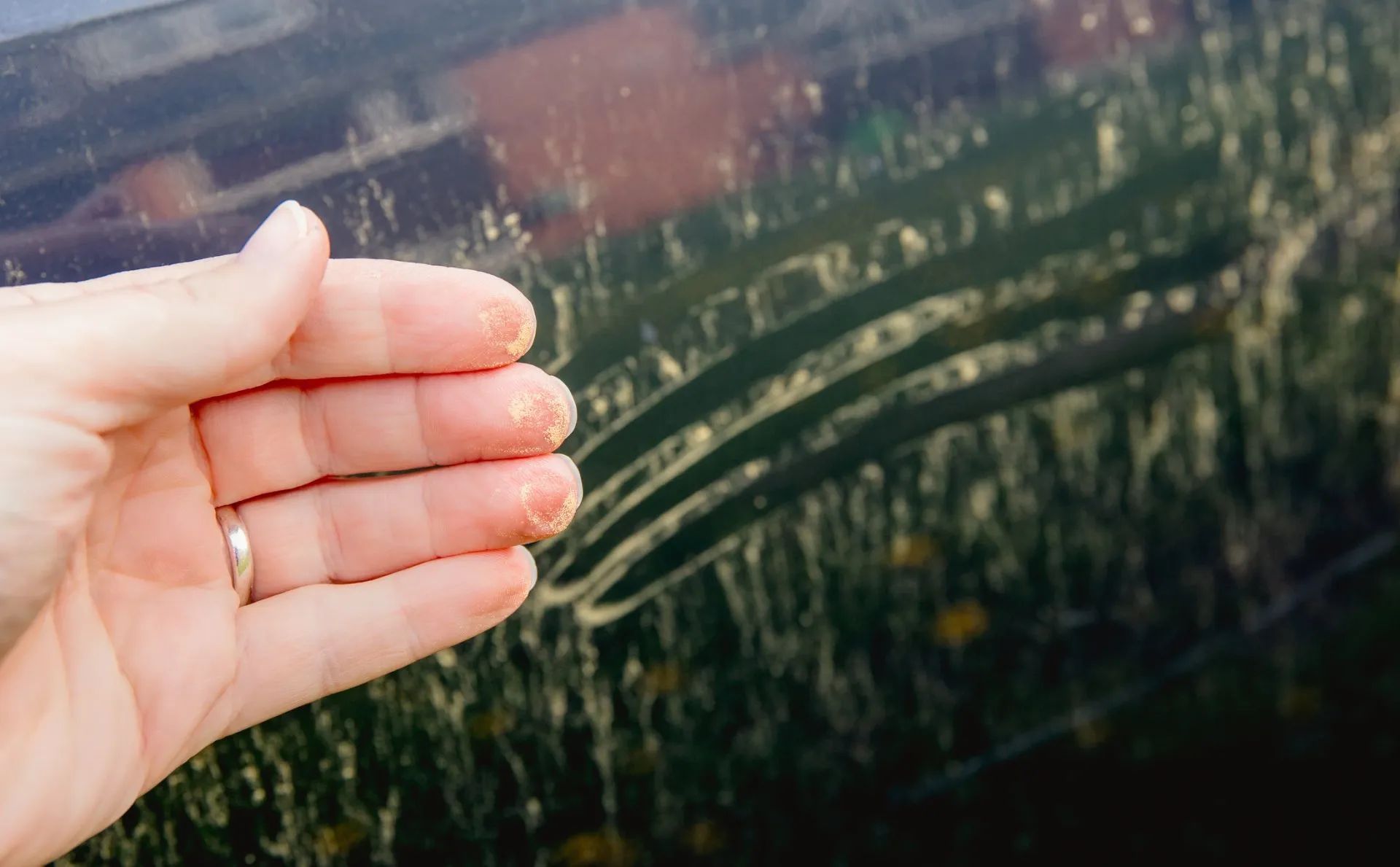
Harmless Dust: Rain droplets collect airborne dust, pollen, and road grime sitting on unwashed paint. When the droplet dries, it leaves a harmless ring of surface dirt that washes off easily during a routine car wash.
Reactivated Mineral Deposits: Sprinkler overspray hit the vehicle earlier in the week, leaving invisible mineral salts behind. Rainwater re-dissolved those surface minerals, pooling them into concentrated droplets that dried in the afternoon sun to reveal fresh etching.
Proactive Defense: Avoiding Local Hard Water Hazards
Preventing water spot damage requires recognizing high-risk zones before water ever touches your paint.
Watch for the Late-Spring Irrigation Switch
In Washington County and NW Portland, commercial properties and HOAs typically activate their irrigation systems between late April and mid-May. Watch for wet asphalt in parking lots during early morning drives, this is a clear indication of active landscaping sprinkler systems nearby.
Practice Strategic Parking
-Avoid Perimeter Spaces: Outer parking spots adjacent to lawn strips, bark dust beds, and decorative hedges are right in the war-zone for sprinkler heads being misaligned and waiting to spray your car.
-Account for Downwind Drift: Oregon summer breezes typically blow from the north/northwest. Fine sprinkler mist can travel 30 to 50 feet downwind onto your clean paint.
-Watch Commercial Landscaping Beds: Shopping centers frequently conceal high-pressure popup heads inside shrubbery that spray well above plant height.
Manage Residential Hazards
If a neighbor's lawn irrigation sprays into your driveway, address it right away. Offer to help them adjust the spray nozzle. Most homeowners are completely unaware their heads are spraying over property lines.
Never Allow Hose Water to Air-Dry
When washing your vehicle at home, never let hose water air-dry. Wash in shaded areas, and dry every panel immediately using a dedicated microfiber drying towel or an air blower.
Even better is to use the easy, safe, and effective “Rinseless Car Washing Method”.
Emergency Response: What to Do in the First 60 Minutes
If you happen to notice fresh sprinkler overspray on your vehicle within about an hour, you can usually safely remove the minerals before thermal heat bakes them into the clear coat, especially if you’ve had a professional-grade ceramic coating applied.
Rapid Removal Steps
-Move it to shade to get your vehicle out of direct sunlight immediately to lower panel temperatures.
-Keep an Emergency Kit in Your Trunk: Stash a bottle of high-lubricity Rinseless wash like Opti-coat No Rinse, and a few clean microfiber towels in your trunk during summer months.
-Saturate the Area: Liberally spray the affected panel with your rinse less wash product. Do not skimp on the liquid! The goal is to encapsulate raw mineral dust and lubricate the surface.
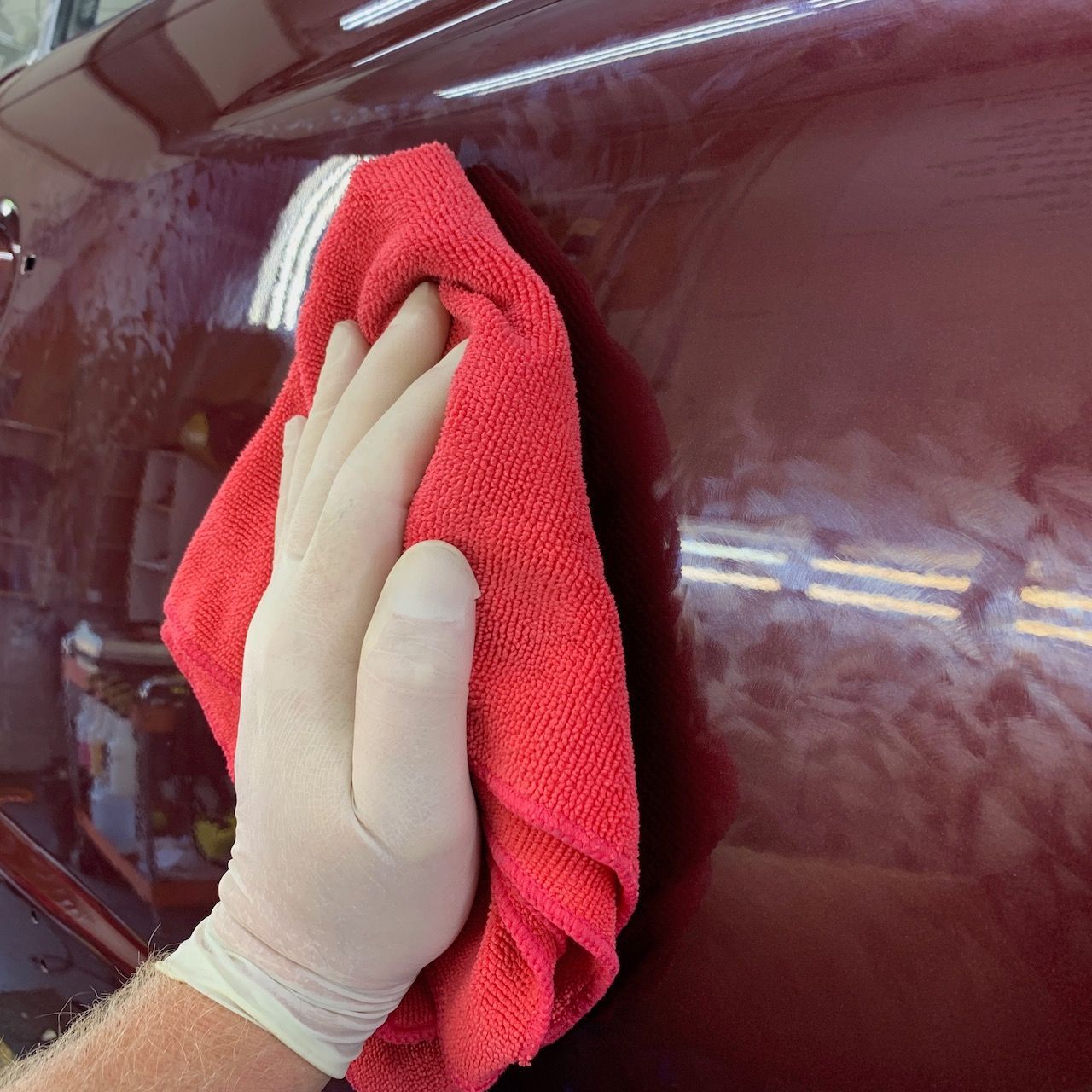
-Gently lift, don't rub the softened mineral droplets by lightly wiping off using your clean microfiber towel. Roll the towel as you wipe to trap minerals inside the plush pile, then buff dry with a separate clean towel.
If water spots have baked in the sun for more than 24 hours, topical wiping will no longer be effective. The minerals have crystallized into the clear coat, requiring professional chemical descaling or precision paint correction.
What NOT to Do: Avoiding Costly DIY Repair Mistakes
When car owners discover baked-on water spots, panic often leads to aggressive DIY attempts that turn minor spot removal into major paint repairs.
-NEVER Use Household Scrub Sponges or Magic Erasers:
Green scouring pads and melamine foam erasers (Magic Erasers) are aggressive abrasives that should never be used on your car’s paint.
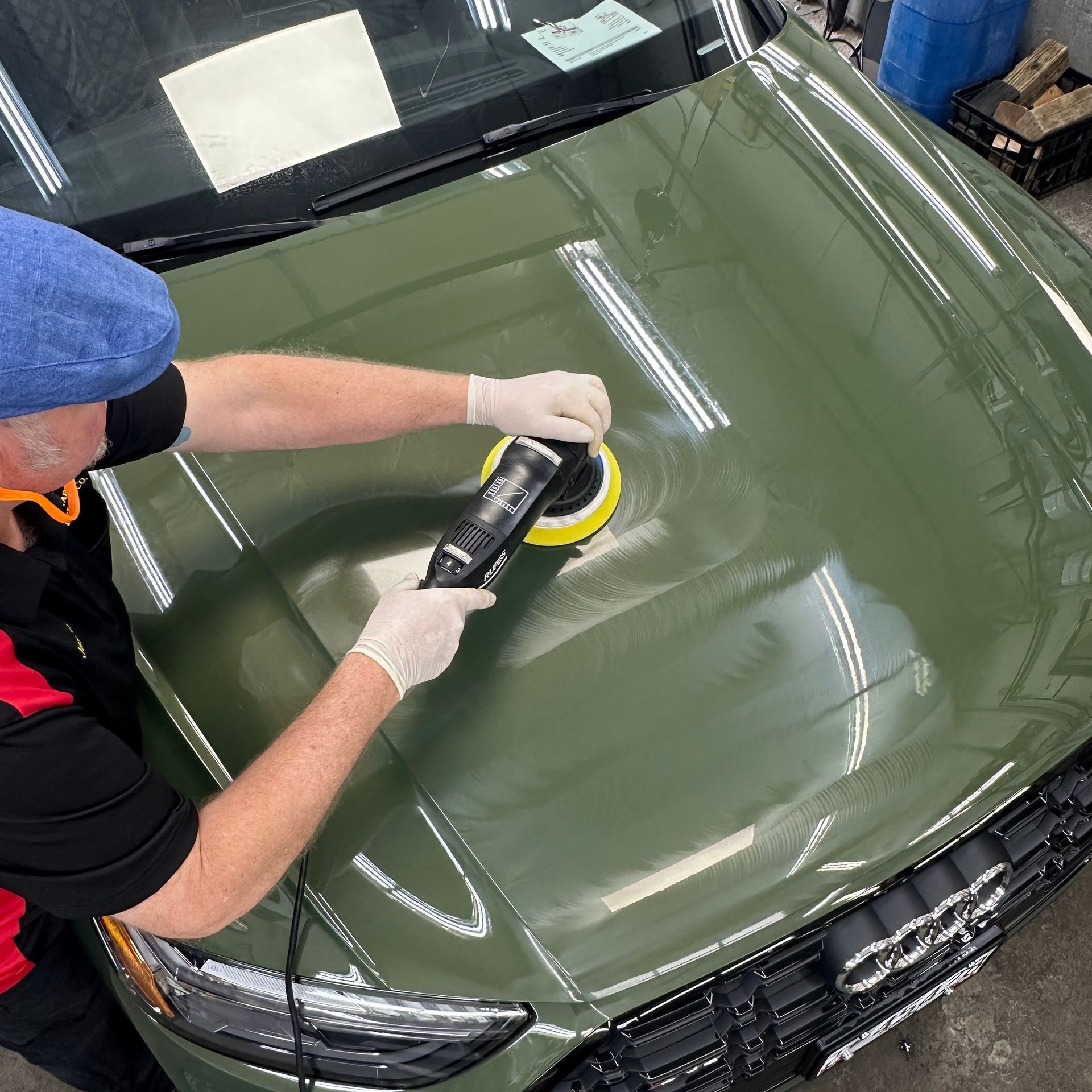
Wiping your paint with these materials will strip and scratch your clear coat instantly, leaving heavy hazing and dull scratches that require expensive machine polishing to repair (known as “paint correction”).
-NEVER Dry-Wipe Mineral Crust:
Attempting to rub off dried white water rings with a dry towel will drag those small but sharp mineral crystals across your paint, gouging deep micro-scratches into your clear coat.
-DO NOT Pour Undiluted Household Vinegar on Hot Paint:
It’s true that mild acetic acid can help dissolve soft calcium deposits, pouring raw vinegar onto warm clear coat under direct sunlight can chemically stain your plastic trim, degrade protective sealants, and pit single-stage paint finishes.
Paint should always be cool to the touch before applying any sort of product.
Protect Your Investment with Professional Defense
If local irrigation sprinklers have left hard water etching across your vehicle's paint or glass, acting early prevents long-term damage.
At Fresh Start Detail & Ceramic Coating Co. in Beaverton, our IDA-certified team uses advanced “professional use only” chemical descaling products, precision machine polishing, and commercial-grade ceramic coatings (including
Opti-Coat Pro SiC systems) to restore clear coat clarity and shield your finish against local water hazards.
Contact us at (503) 641-3285 or stop by our Beaverton shop for a free paint evaluation and custom protection plan.