Why Ceramic Coating is Mandatory for Matte Satin Paint and Decals
There is no denying the dramatic increase in popularity that matte finishes, satin wraps, and bold vinyl graphics have on modern automotive culture.
Whether it’s a stealthy aftermarket wrap or an ultra-premium factory finish like Mercedes’ Magno series or BMW’s Frozen paint, a non-glossy surface gives a vehicle a unique and sometimes aggressive look.
But buying a matte vehicle usually comes with a massive wave of immediate anxiety for the owner because they're frequently not sure of how to care for this style of paint. Should you use wax, a sealant perhaps, or an off-the-shelf DIY ceramic coating?
As a professional detailer who has spent over 31 years in the trenches of preservation-focused detailing, I hear the same questions every single week at my shop in Beaverton: “How do I protect this paint? Can I ceramic coat it? And if I do, is it going to turn my beautiful matte finish into a shiny, glossy, blotchy mess?”
If you are asking these questions, you are asking the right things! But there is a lot of misinformation out there. Let’s clear up the confusion once and for all. Not only can you ceramic coat matte paint and decals, but if you want to keep your vehicle looking pristine, a dedicated ceramic coating that is designed specifically for non-glossy finishes is practically mandatory.
This blog post is a deep dive into why prevention is your only line of defense, the actual science of how a matte coating bonds to your car, and how we prove it doesn’t add artificial shine.
Navigating the Jargon: Matte, Satin, Frozen, and Stealth Finishes
Depending on the brand of your vehicle or how your non-glossy look was achieved, you might hear a handful of different terms thrown around. In the automotive industry, "matte" is often used as a catch-all phrase, but manufacturers and wrap installers use a more specific vocabulary.
Understanding these terms will help you identify exactly what is on your car:
- Factory Matte & Satin Paint: While they look similar, a true dead-matte paint is completely flat, whereas a satin finish has a very faint, silky sheen. In reality, most factory "matte" cars are technically satin because it gives the body lines more definition.
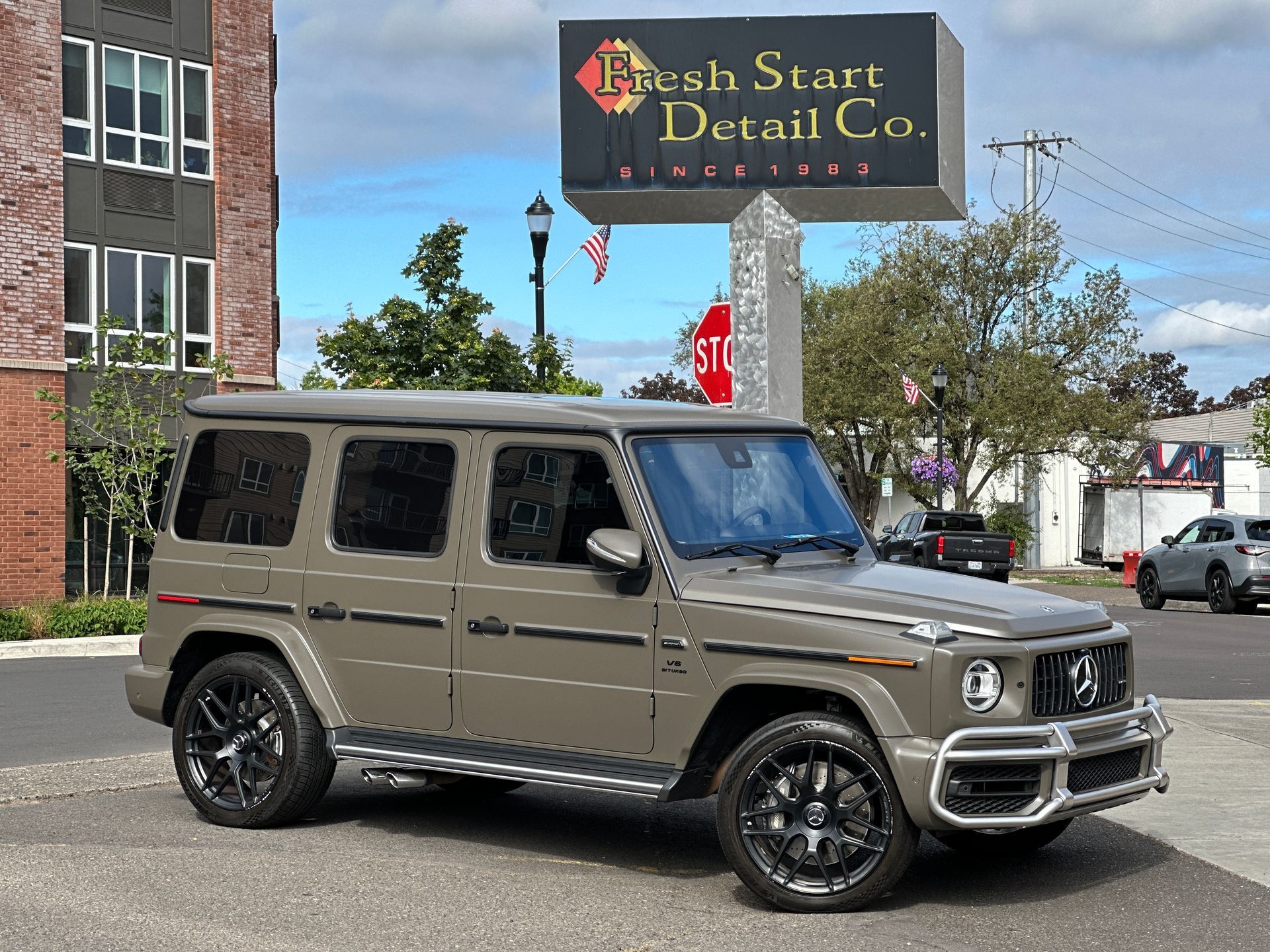
- Manufacturer-Specific Names: High-end car brands love to use proprietary names for their low-gloss clear coats. If you drive a Mercedes-Benz, their factory matte lineup is called Magno paint (such as their famous Designo Magno series). If you are a BMW owner, it’s designated as Frozen paint (like Frozen Carbon Structure or Frozen Gray). Even mainstream brands like Hyundai and Kia have brought this mainstream with their popular "Matte" factory finishes.
- Satin/Matte Vinyl Wraps: This is a color-change vinyl film applied over standard factory gloss paint to alter the vehicle’s look and texture simultaneously.
- Stealth Wraps & Satin PPF: This refers to clear Paint Protection Film—most famously XPEL Stealth, or Stek’s DYNOmatte—that is applied over standard glossy paint. It instantly transforms the underlying gloss into a satin version of itself while providing heavy-duty rock chip protection.
Whether you call it flat paint, low-gloss clear coat, Magno, Frozen, a matte vinyl wrap, or a Stealth DYNOmatte wrap, the underlying rule remains exactly the same: the surface is microscopically textured, it cannot be polished, and it requires specialized ceramic protection.
The Big Myth: Will a Ceramic Coating Make Matte Paint Shiny?
The short answer is no... as long as you use a dedicated, professional-grade matte ceramic coating.
The fear of adding artificial shine keeps many owners from protecting their cars. If you apply a cheap, off-the-shelf consumer coating or a generic glossy ceramic spray, it will “pool” in those microscopic valleys, leveling the surface and adding an unwanted, patchy sheen.
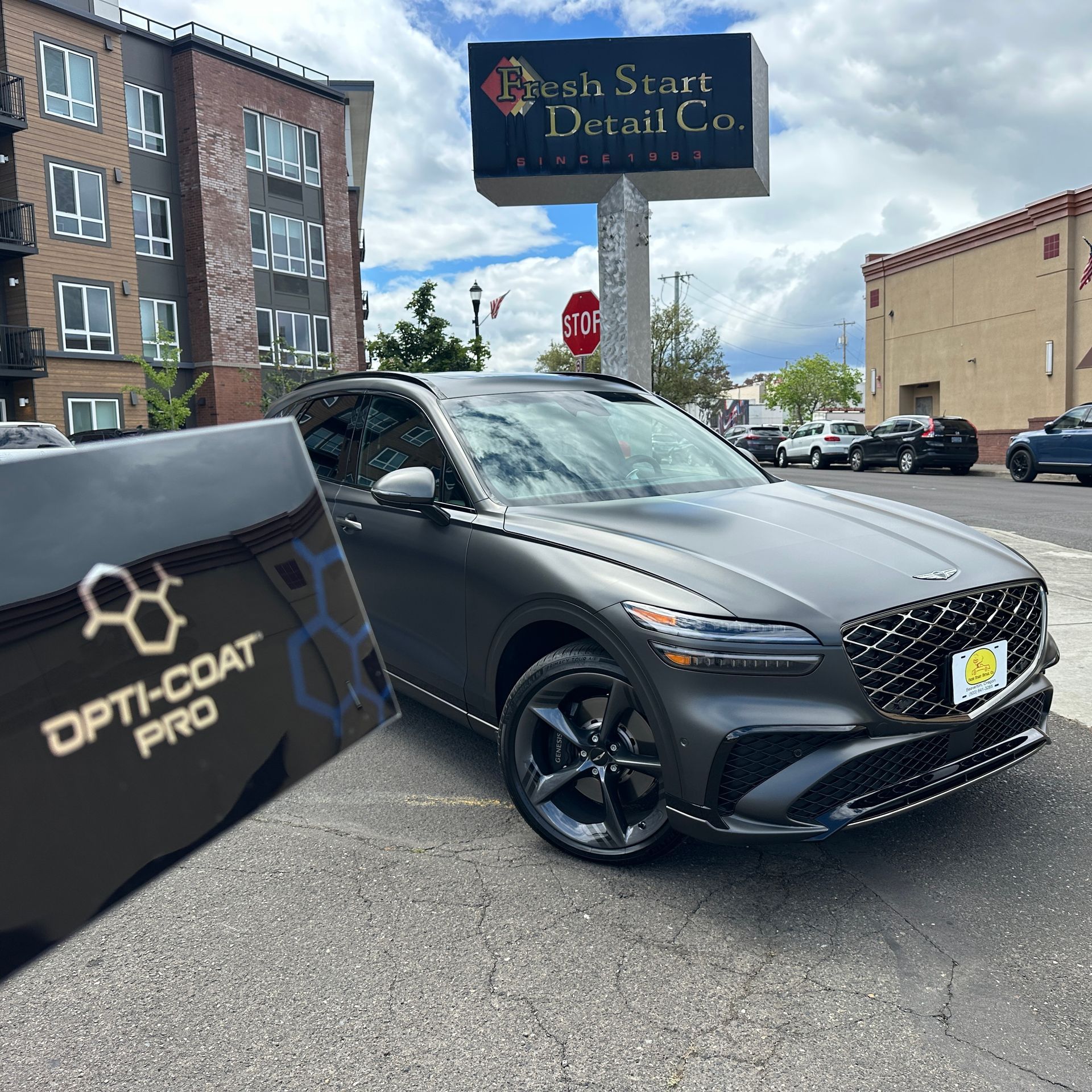
However, a dedicated professional-grade ceramic coating like Opti-Coat Pro is engineered specifically for this exact paint architecture. Instead of pooling and flattening the surface, the coating molecules precisely follow the natural bumps, peaks, and ridges of the matte clear coat. It bonds directly to the existing texture, sealing it under a microscopic layer of defense without altering the way light scatters off the surface.
When applied properly, a professional matte coating won't add gloss. Instead, it deepens the color, giving factory finishes like Mercedes Magno paint an incredibly rich, ink-like, premium appearance while keeping the flat finish completely intact.
The Golden Rule of Matte Paint: You Cannot Polish It
To understand why a ceramic coating is so critical for a matte or satin finish, you have to look at the surface on a microscopic level.
Standard glossy paint is smooth. Light hits the flat, mirror-like surface of the clear coat and reflects directly back into your eyes, creating depth, reflection, and shine.
Matte paint is entirely different. A factory matte clear coat is intentionally engineered with a rough, uneven texture. If you were to look at a cross-section of matte paint up close, you wouldn't see a flat plain—you would see a complex landscape of microscopic hills, valleys, peaks, and ridges. When light hits this jagged architecture, it scatters in a hundred different directions instead of reflecting cleanly. This scattering effect is exactly what creates that muted, low-sheen satin appearance.
This brings us to the single most dangerous characteristic of matte paint: it cannot be mechanically polished, buffed, or paint-corrected.
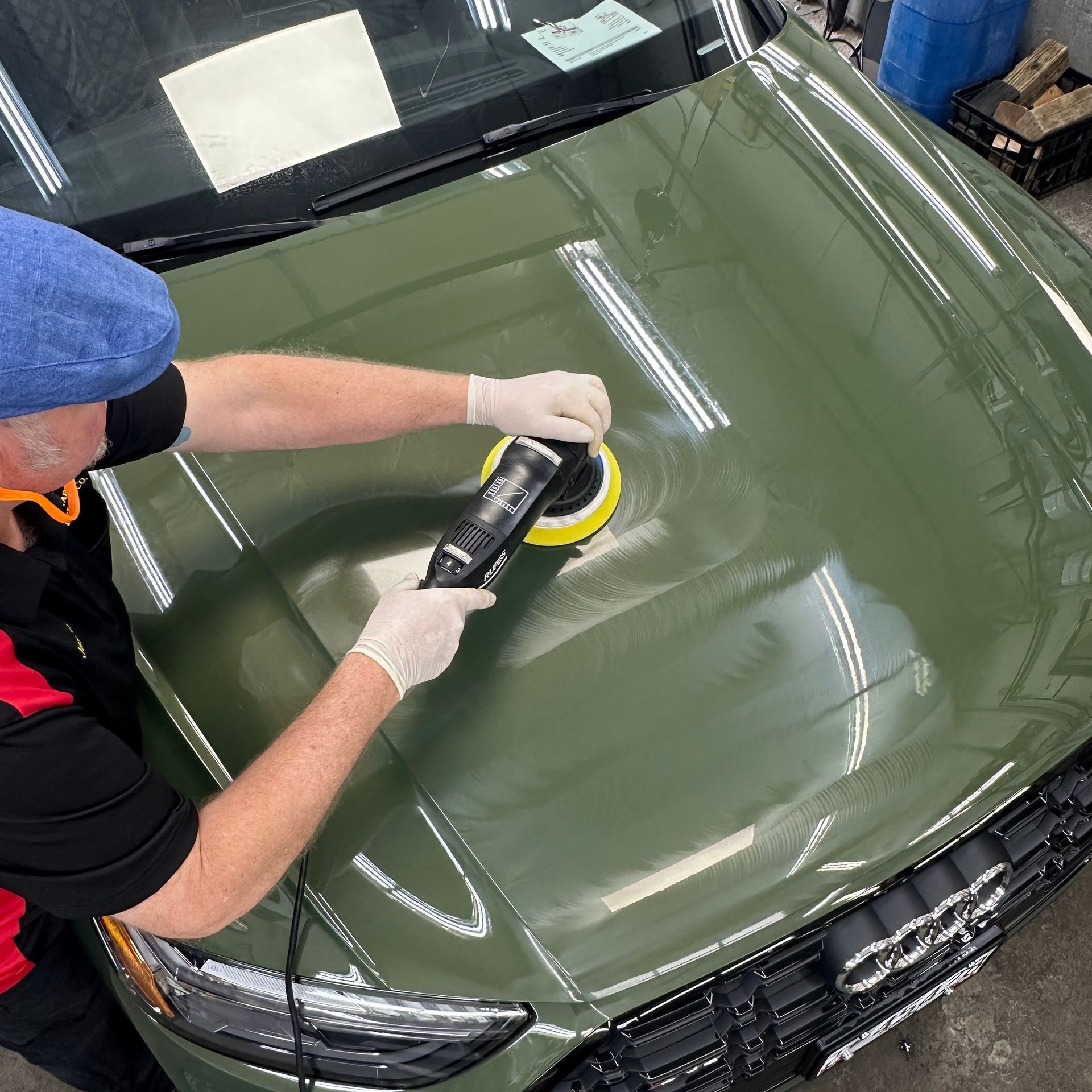
On a traditional glossy car, if you get a light swirl mark, a minor scratch, or a bit of etched damage, an IDA-Certifiedd detailer can use a dual-action polisher and an abrasive compound to level the surrounding clear coat. By flattening out the microscopic scratch, the defect disappears, and the flat reflectivity is restored.
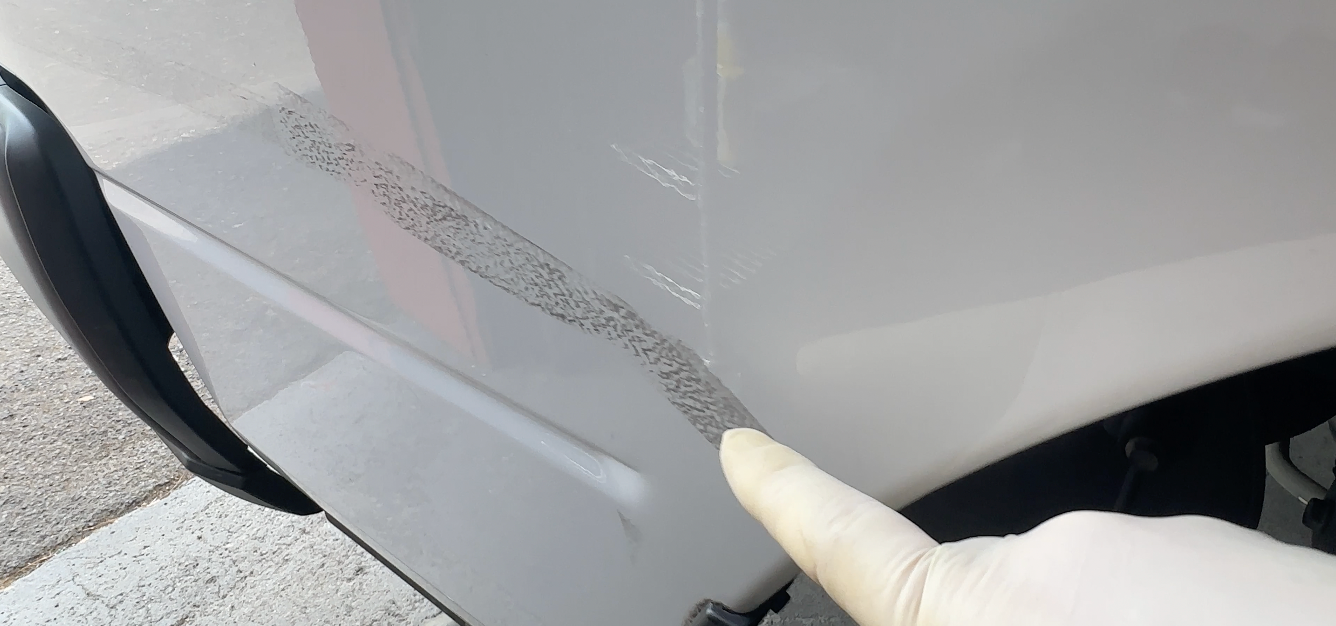
If you touch a high-speed polisher or an abrasive polish to a matte car, you will instantly level those microscopic peaks and valleys. By permanently flattening that textured clear coat, you will create an irreversible, awkward, shiny bright spot right in the middle of your panel.
Why the Stakes Are Higher for Matte Finishes
Because you cannot polish the paint, everyday environmental hazards transform from minor inconveniences into total nightmares.
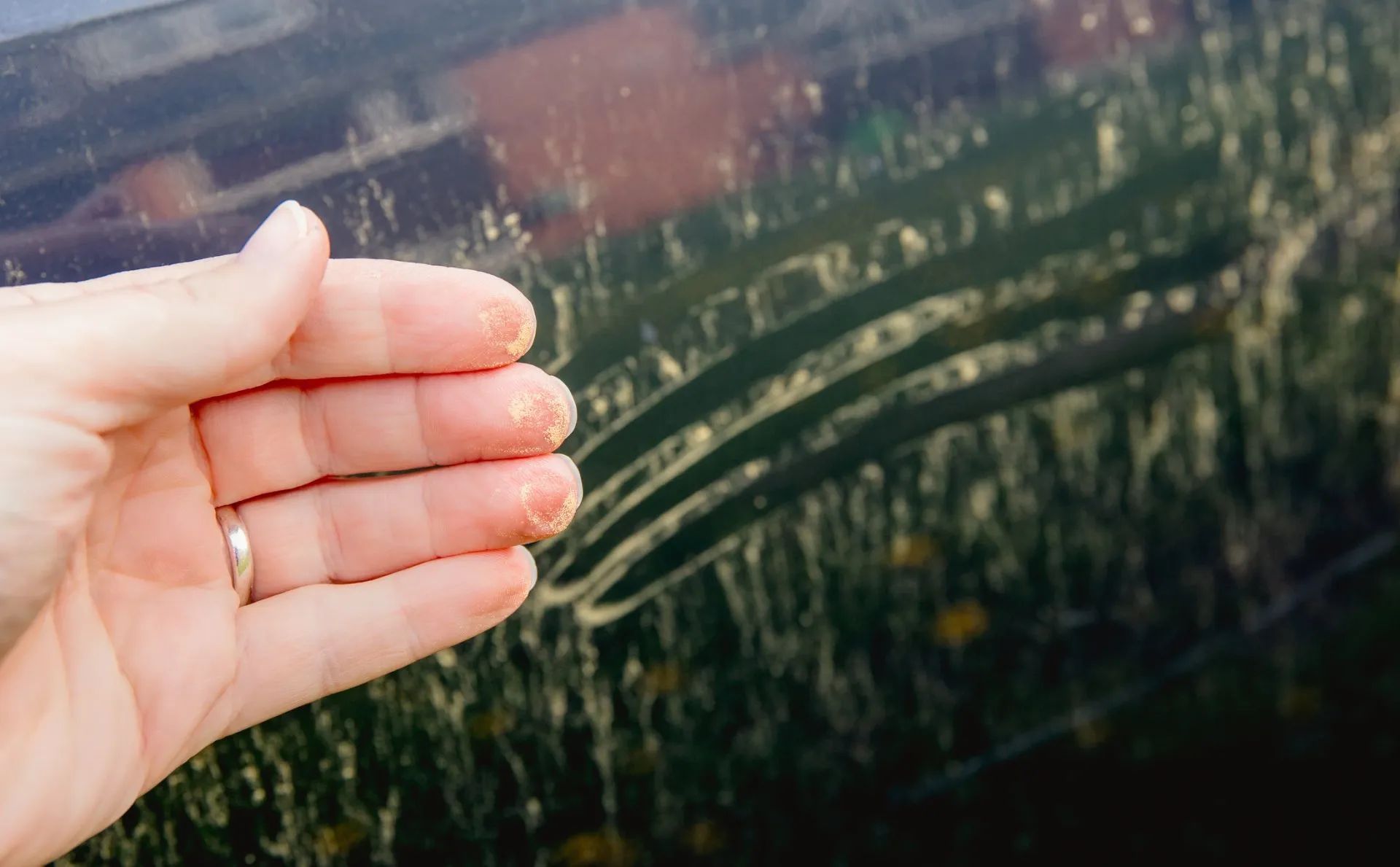
- Tree Sap: On a glossy car, a baked-on drop of tree sap might leave a slight blemish, but a professional can easily polish it out. On matte paint, if tree sap causes a blemish, you cannot buff it away. The damage is permanent.
- Bird Droppings: Bird poop is highly acidic. If left on the paint too long, it eats into the surface and leaves a distinct, dull stain. On a standard car, we polish it out. On a matte car? It's a permanent scar.
The Reality Check: If your matte paint gets scratched, stained, or etched by environmental fallout, the only remedy is to completely repaint the entire panel. There is no quick fix. Because correction is impossible, prevention is your only option.
Behind the Scenes: How We Apply and Level the Coating
Applying a coating to matte paint requires absolute precision because there is zero margin for error. If a detailer leaves a streak or an uneven "high spot" (excess coating) on a glossy car, it can be polished off and re-applied. If they leave a high spot on a matte car, that mistake is locked in permanently.
In my shop, we follow a strict, professional process to guarantee a flawless finish:
- Meticulous Prep: A thorough hand wash and decontamination process to remove any bonded contaminates like tree sap, paint over-spray, road tar etc. is followed by a solvent wipe-down to prepare your paint’s surface for the chemical reaction that occurs when applying a ceramic coating.
- Precision Application: We prime a dedicated microfiber applicator pad with Opti-Coat Pro and lay down the coating in precise, overlapping sections, ensuring every single microscopic hill and valley is evenly covered.
- Monitoring the "Flash": Once applied, the coating begins to dry (a process we professionals call flashing). This is when the carrier solvents (the liquids that carry the ceramic molecules to the paint) begin to evaporate, and the coating changes appearance on the surface.
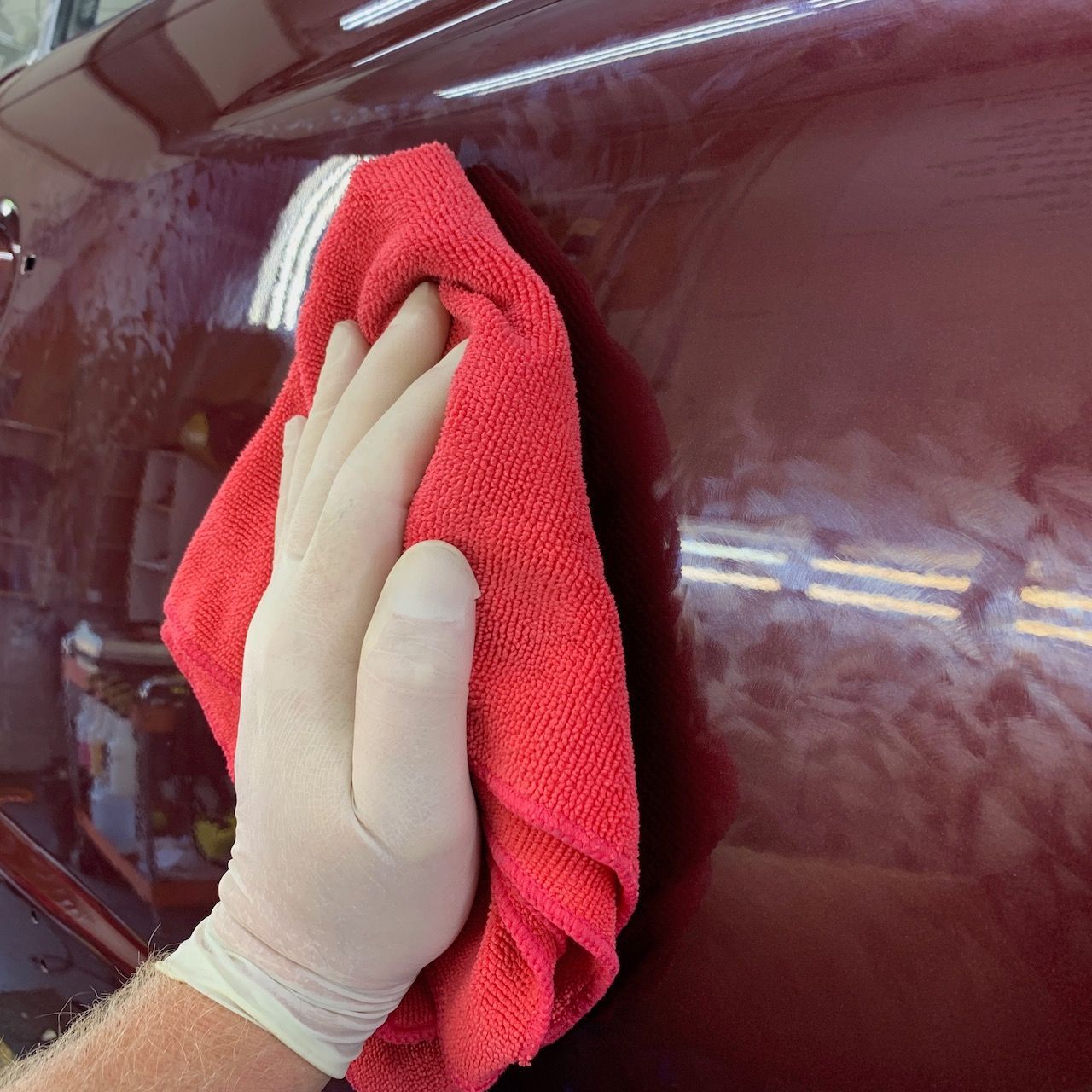
- Perfect Timing Leveling: Right when the coating hits about 80% flashed off, we use a specialized, pearl weave microfiber towel to level the section. This step safely wipes away the excess carrier solvents while leaving the active ceramic molecules bonded tightly to the peaks and ridges of the paint.
The result? A perfectly seamless transition. If you do a side-by-side before and after test on a panel, there is absolutely no visual difference or artificial shine from the coated side to the uncoated side. The only difference is that one side now has a durable armor against the elements.
Don't Forget the Decals: Protecting Factory Vinyl Graphics
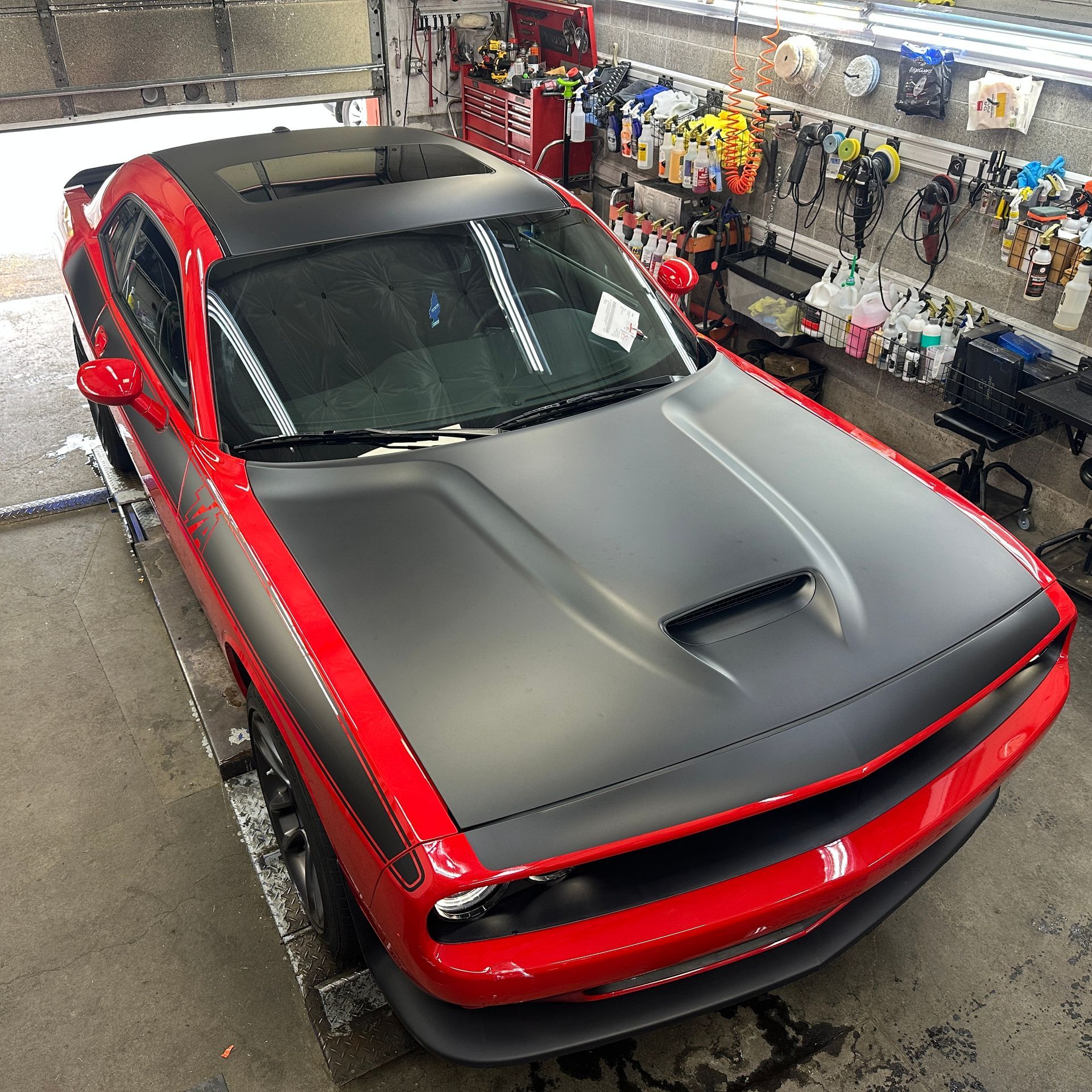
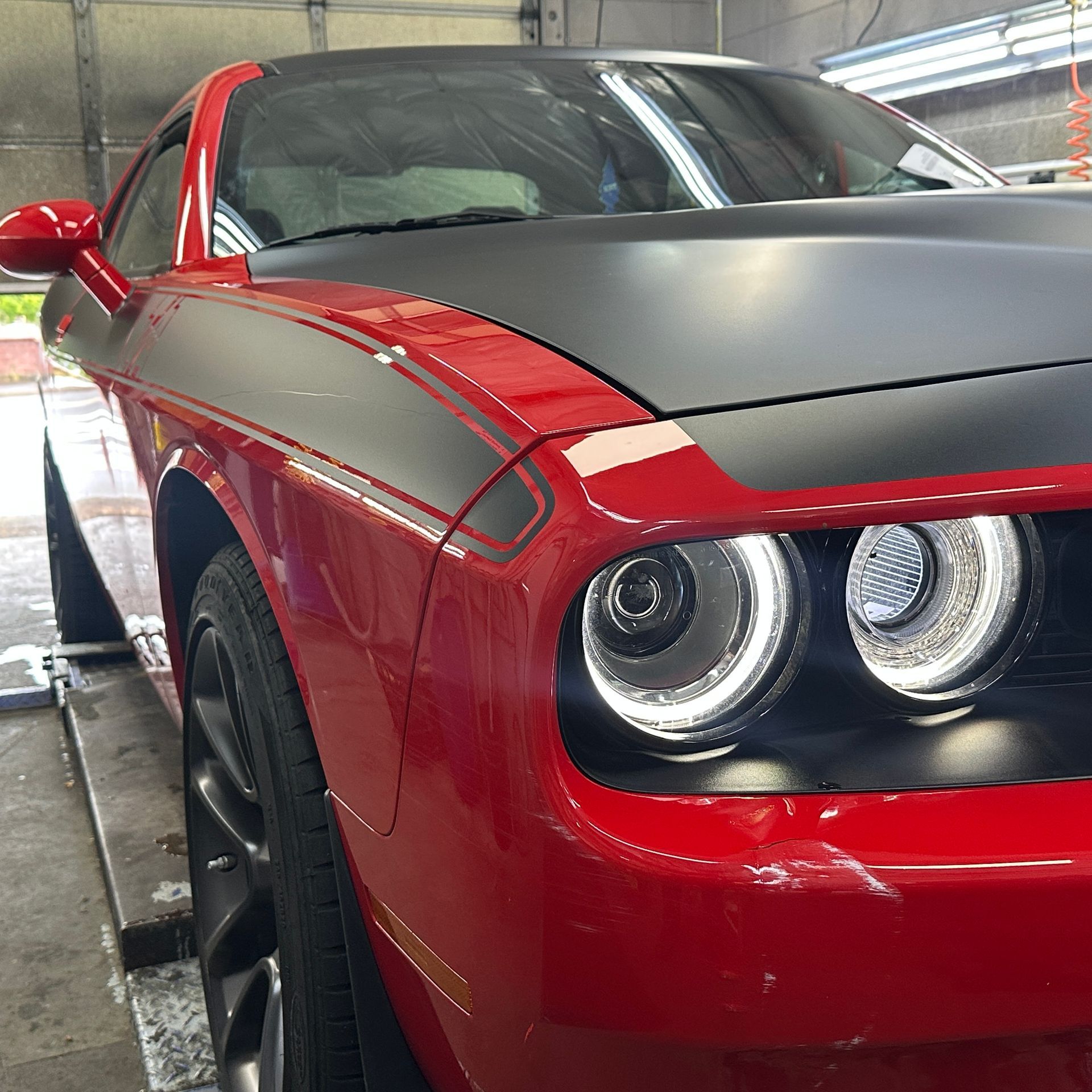
This defensive strategy isn't just for solid paint panels. It is equally important for vehicles featuring matte or satin accent decals, racing stripes, or factory hood graphics (which are common on many high-performance models).
Vinyl graphics are highly susceptible to UV degradation, fading, and edge-lifting. This is because vinyl is naturally porous, so environmental contaminants like industrial fallout and road grime can easily embed themselves into the material, causing permanent staining.
Opti-Coat Pro works beautifully on these decals. It creates a non-porous, UV-blocking barrier directly over the vinyl, preventing the sun from bleaching the colors out and making it incredibly easy to wash away harsh road grime before it can cause a permanent stain.
Trust the Longest-Running Authority in Oregon
Because matte paint is so unforgiving, you cannot afford to trust your vehicle to an inexperienced hobbyist, a dealership, or a shop using unproven products and untested detailers. You need an installer with deep technical expertise, proper environmental controls, and a track record of standing behind their work.
When I took over
Fresh Start Detail & Ceramic Coating Company in 1995 in Beaverton, I committed to mastering the highest level of surface protection available. I’ve personally tested countless ceramic coatings over the decades so I know exactly how they perform, and which ones work best for your specific situation. I test these products on mom own personal vehicles for literally years before I ever offer to install them on your car.
I have been a career professional in the automotive detailing industry since 1995, and I hold the IDA’s (International Detailing Association) highest rank called “Skills Verified”.
When ceramic coatings were first invented, I pioneered bringing them to Oregon. I only install the most durable, chemically advanced ceramic coating systems in the world, period.
As the very first authorized Opti-Coat installer in the entire state of Oregon, I have been working with their advanced silicon carbide (SiC) technology since its absolute inception all those years ago.
Over the last three decades, I have coated everything from rare classics to modern matte supercars. When you bring your vehicle to Fresh Start Detail & Ceramic Coating Co., you aren't just buying a product out of a bottle; you are leveraging decades of daily, hands-on refinement, certified factory backing, and an elite local reputation (check out my Google reviews).
The Verdict: Protect Your Investment Early
Don't wait for a rogue bird dropping or stubborn tree sap to leave a permanent mark on your car.
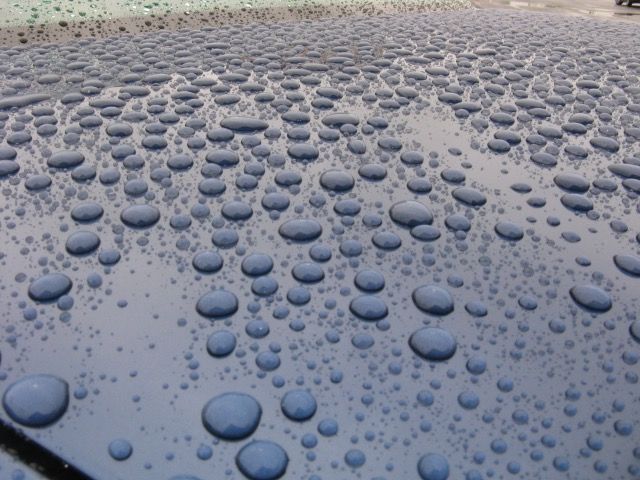
Matte paint and custom decals look phenomenal on the road, but they require a proactive defensive strategy. A professional matte ceramic coating provides the crucial chemical resistance, intense hydrophobic properties (water-beading), and UV protection needed to keep environmental hazards from ruining your vehicle's appearance.
Contact Fresh Start Detail & Ceramic Coating Company in Beaverton today to discuss a tailored protection package for your matte, satin, or wrapped vehicle.
503 641-3285
info@freshstartdetail.com