Do Ceramic Coatings Need UV Lamps Curing Myths Debunked
The Great Ceramic Coating Myth: Why Your Detailer Doesn’t Need a UV Curing Lamp (And Why the AI Is Wrong)
In the age of instant information, a new challenge has emerged for seasoned ceramic coating professionals: the "AI Expert."
With increasing frequency, customers are coming to us armed with false information generated by ChatGPT, Gemini, or other AI apps. These AI apps get their info from large language models and outdated forum posts. While technology is great, it often lacks the nuance of three decades of hands-on experience and cold hard proven scientific data about ceramic coatings.
Currently, a massive misconception is circulating online, the idea that all high-quality automotive ceramic coatings require specialized UV lamps for curing and must be kept bone-dry for at least 24 to 48 hours after the professional detailer applies them. This is dead wrong.
If you’ve been told that a coating isn't "professional grade" unless it’s baked under red lights, or if you’re terrified that a stray rain cloud two hours after pick-up will ruin your investment, it’s time to clear the air.
The reality is that while newer, inferior entries to the market have tried to shift the narrative, Opti-Coat’s Silicon Carbide (SiC) technology (the very chemistry that started the ceramic revolution well over a decade ago) has always provided superior protection without the need for artificial UV curing.
In truth, the industry was built on the high standards of Opti-Coat’s non-UV curing formulas; the current 'requirement' for lamps is actually a step backward, introduced by late-coming brands to compensate for chemistry that lacks the stability of the original SiC professional lineup.
The Truth About UV Lamps and Infrared Curing for Ceramic Coatings
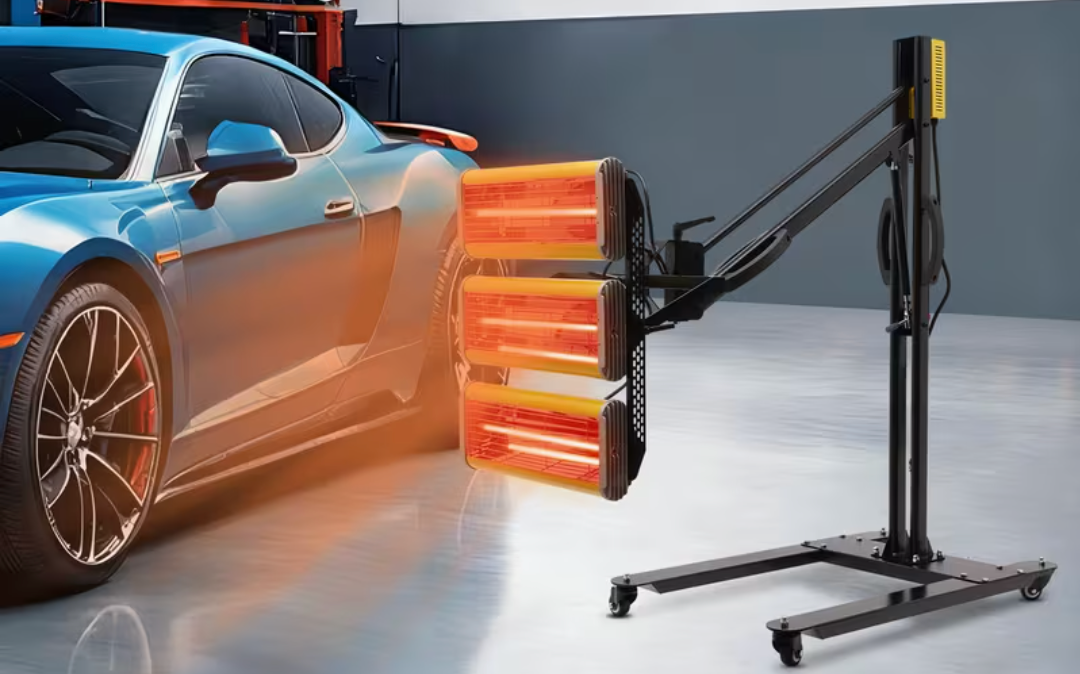
Why does the internet insist on UV or Infrared (IR) lamps? Historically, many early-generation copycat ceramic coatings and lower-tier consumer products relied on slow-evaporating solvents. To speed up the "flash" time and ensure the coating didn't remain tacky for days, detailers used IR lamps to bake the surface.
Why Some Shops Use Baking Lamps
Furthermore, some newer "light-cured" coatings specifically designed for high-volume shops use UV-sensitive resins. While this isn't necessarily bad technology, it is a different beast entirely. Somewhere along the line, the AI algorithms scraped this data and synthesized a "universal rule" that states: No lamps = No cure.
For a professional with over 31 years in the industry, this is like saying a chef isn't professional unless they use a microwave. In reality, the best coatings on the planet rely on superior chemistry, not external heat sources.
SiC vs. SiO2: Why Silicon Carbide Is Chemically Superior
To understand why UV lamps are unnecessary for the best coatings, we have to look at the chemistry. Most coatings on the market are SiO2 (Silicon Dioxide) based. While SiO2 provides great gloss and water-beading, it essentially sits on top of the clear coat as a sacrificial layer.
The Benefit of Permanent Chemical Bonding
Opti-Coat Pro, Opti-Coat Pro Plus, and Opti-Coat Pro3 all utilize a different foundation: Silicon Carbide (SiC). When a certified professional applies a Silicon Carbide coating, a chemical reaction occurs. The coating doesn't just "dry" on top of the paint; it cross-links and bonds into the factory clear coat. This creates a permanent, ceramic layer that is chemically superior to the "hybrid" SiO2 coatings that require artificial curing help.
Because the bonding process of Opti-Coat is a chemical reaction rather than a simple solvent evaporation, it doesn't need to be "baked" to achieve its structural integrity. The bond happens at the molecular level, at ambient temperatures, governed by the expertise of the installer rather than a heat lamp.
How Long Does a Professional Ceramic Coating Actually Take to Cure?
The second most common fear we encounter is the "24-hour rule." We see customers checking the weather apps with existential dread, worried that a light shower will "wash away" their coating.
Is It Safe to Drive in the Rain After Coating?
With a professional-grade Opti-Coat application, this fear is unfounded. When applied by a certified professional who understands environmental controls (humidity, surface temperature, and decontamination), these coatings are remarkably resilient.
Because of the rapid cross-linking of the SiC molecules, Opti-Coat’s coatings are "rain-ready" within just two hours of application. While we still advise against high-pressure chemical washes for the first week to allow the coating to reach full hardness, natural rainwater will not compromise the bond or the finish once the initial "flash" and set-up period has passed. We will never release a car back to the customer that isn’t 100% ready to be safely driving in the rain.
Why Curing Lamps Can Be a Red Flag for Low-Quality Resins
In many cases, the requirement for UV or IR lamps is actually a sign of an inferior or less stable product. If a coating requires a lamp to harden properly, it often means the resin system is less efficient at room temperature or is overly sensitive to atmospheric moisture.
By choosing a Silicon Carbide-based professional coating, you are choosing a product designed for longevity and chemical resistance that surpasses the "bake-on" alternatives. Opti-Coat was engineered to be a permanent part of the vehicle, providing a level of protection against bird droppings, acid rain, and UV damage that "light-cured" coatings simply cannot match over the long haul.
30 Years of Experience vs. The "AI Expert"
When you hire a Beaverton professional with over three decades of experience, you aren't just paying for the liquid in the bottle. You are paying for the knowledge of how that liquid interacts with your specific paint type, the local Portland area climate, and the science of chemical bonding.
The "AI" doesn't know that Opti-Coat Pro3 creates a layer that is significantly thicker and more resistant to environmental acids than the coatings it’s reading about in DIY forums. It doesn't know that the "bake" process is often a marketing gimmick used to make a shop look "high-tech" when their chemistry is actually lagging behind.
Trust the Experts: Ceramic Coating in Beaverton, Oregon
If you want the absolute best protection for your vehicle, don't look for the curing lamps. Look for the certification.
At Fresh Start Detail & Ceramic Coating Co., we only use the Opti-Coat professional lineup because we know it works, not because a computer told us so, but because we’ve seen the results on thousands of vehicles over a 31-year career. You can drive away with confidence, even if there’s a cloud in the sky, knowing that your car is protected by the most advanced Silicon Carbide chemistry available today.
Stop fighting the myths and start enjoying the gloss.